How to Store Dried Herbs: Light, Heat, Humidity & Amber Glass Containers
Protect volatile oils, anthocyanins, and chlorophyll from their four primary enemies: UV sunlight, stove heat, oxygen, and ambient kitchen moisture.
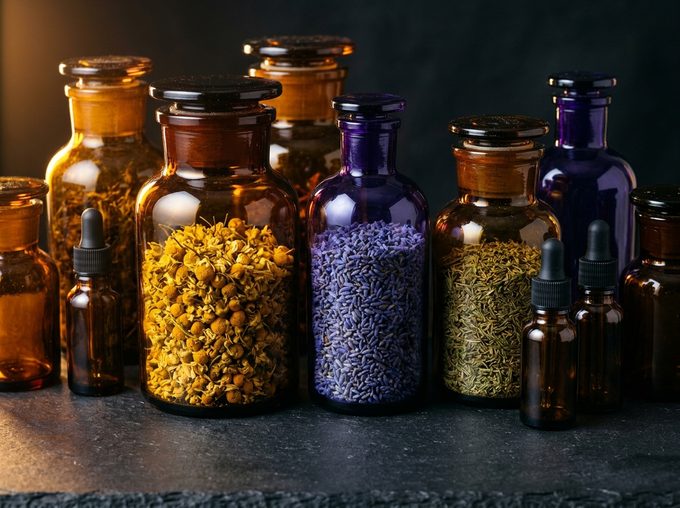
1. Why Clear Glass on a Sunny Sill Bleaches Botanicals
Ultraviolet and visible light rapidly break down green chlorophyll in nettle and mint, as well as golden lutein and carotenoids in calendula and rosehips. Store herbs in amber glass, violet Miron glass, or inside an enclosed dark cabinet.
2. Keep Strong Aromatics in Dedicated Jars
Pungent botanicals—especially peppermint, valerian root, star anise, and eucalyptus—will slowly permeate thin plastic bags and flavor neighboring mild blossoms like linden or red clover. Always transfer bulk pouch refills into thick glass jars with airtight lids.
3. Typical Apothecary Shelf-Life Guidelines
When kept cool, dark, and airtight: delicate dried flowers and leafy herbs retain peak vibrancy for 12 to 18 months; whole aromatic seeds and barks hold for 18 to 24 months; and dense dried roots and tree resins remain stable for 2 to 4+ years.
Representative Botanicals & Extraction Parameters
| Botanical & Binomial | Plant Part | Key Phytochemicals | Organoleptic Palate & Aroma | Dose & Steep (8 oz) |
|---|---|---|---|---|
| Common Thyme Thymus vulgaris |
Aerial leaves & flowering tops | Thymol, Carvacrol, Linalool, Rosmarinic acid | Pungent, earthy, and camphoraceous with a warming clove-like thymol bite and a dry, slightly astringent finish. | 1.5 g – 2 g 200°F–205°F · 8–10 min |
| Garden Sage Salvia officinalis |
Whole or rubbed velvety leaves | Rosmarinic acid, Camphor, Cineole, Salvianolic acids | Savory, resinous, and slightly bitter-astringent with warm camphor, pine, and eucalyptus undertones and a velvety mouthfeel. | 1.5 g – 2 g (1 tbsp rubbed leaf) 200°F · 6–8 min covered |
| Rosemary Salvia rosmarinus |
Evergreen needles & flowering sprigs | Carnosic acid, Rosmarinic acid, 1,8-Cineole, Alpha-pinene | Crisp, piney, resinous, and invigorating with bright 1,8-cineole, camphor, and woody balsamic notes. | 1.5 g 200°F–205°F · 7–10 min covered |
| Peppermint Mentha × piperita |
Serrated aerial leaves | Menthol, Menthone, Menthyl acetate, Rosmarinic acid | Intensely brisk, sweet-herbaceous, and peppery at first sip, followed by a prolonged, clean menthol cooling sensation across the palate. | 2 g (1 heaping tbsp) 200°F · 7–10 min covered |
| Greek Oregano Origanum vulgare hirtum |
Dried leaves & flower buds | Carvacrol, Thymol, Rosmarinic acid, Beta-caryophyllene | Bold, fiery, savory, and peppery-warm with high carvacrol intensity that numbs the tip of the tongue slightly when chewed raw. | 1.5 g 200°F–205°F · 8–10 min covered |
| Sweet Basil Ocimum basilicum |
Tender leaves & flowering tops | Linalool, Eugenol, Estragole, Citral | Lush, sweet-spicy, and floral-anise with warm clove and sweet linalool top notes. | 2 g dried (1 tbsp) 195°F · 5–7 min covered |
| Bay Laurel Laurus nobilis |
Whole leathery dried leaves | 1,8-Cineole, Eugenol, Linalool, Costunolide | Deeply balsamic, woody, and savory-herbal with layered notes of eucalyptus, clove, pine, and nutmeg. | 2–3 whole dried leaves (cracked in half) 205°F–212°F gentle simmer · Simmer covered 10–12 min, then let stand 5 min |
| German Chamomile Matricaria chamomilla |
Whole flower heads | Apigenin, Chamazulene, Alpha-bisabolol, Flavonoids | Honey-sweet, crisp green-apple aroma with a soft, golden floral palate that turns mildly bitter only if over-steeped. | 2 g – 3 g (1.5 to 2 tbsp) 195°F–200°F · 5–7 min covered |