Chamomile
Soft, apple-scented flowers long kept for evening teas and quiet moments.
Explore the common forms, learn a little about the plant, and choose what suits your cupboard.
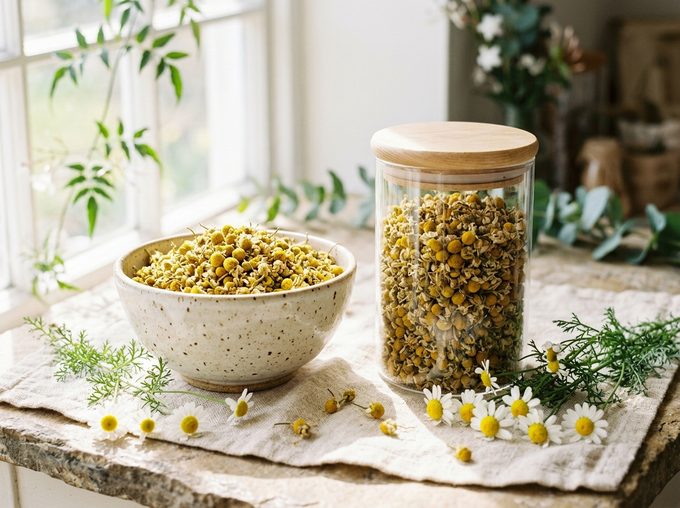
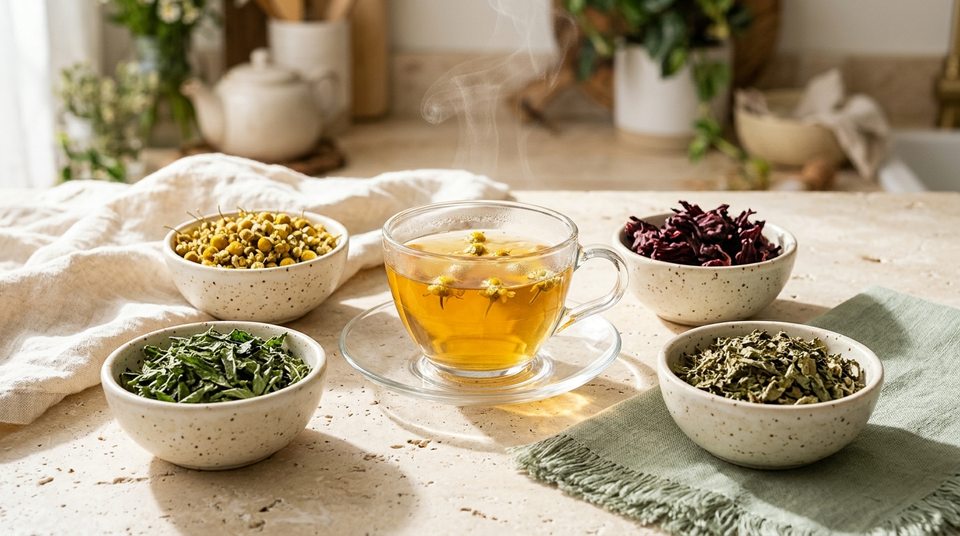
Whole dried chamomile flowers for steeping and infusions.
A little about chamomile.
The plant
Small daisy-like flowers with a gentle, honeyed aroma and mild floral taste.
The forms
Most often used as whole dried flowers for loose-leaf tea, simple infusions, and calming blends.
Before you choose
Check the ingredient list to make sure it's true chamomile, and choose the form that suits your intended use.
Traditional uses & research +
Botanical taxonomy: Matricaria chamomilla (Asteraceae (Daisy Family)) · Tradition: Calming Nervines · Key constituents: Apigenin, Chamazulene, Alpha-bisabolol, Flavonoids.
Curated collections: Evening Calm & Bedtime Infusions · Ruby Berries & Floral Tisanes · Beginner's Home Apothecary Starter Shelf · Seasonal almanac: May Almanac (May Blossom & Early Meadow Florals).
Traditional background: Revered by ancient Egyptians as a solar flower and named khamaimelon ('earth apple') by the Greeks for its crisp orchard fragrance, chamomile is the most widely steeped bedtime blossom in the world.
Everyday & kitchen uses: Brewed as a solo evening tisane, blended with lavender and lemon balm, or infused into soothing botanical bath sachets and skin oils.
Standard preparation methods (compare all 50 steeping temperatures):
- Gentle Evening Floral Infusion (2 g – 3 g (1.5 to 2 tbsp whole flower heads) at 195°F–200°F (90°C–93°C)): 5–7 min covered (strain promptly for sweet flavor)
- Stronger Digestive Bitters Steep (3 g – 4 g (2.5 tbsp whole flowers) at 205°F (96°C)): 12–15 min covered (extracts deeper sesquiterpene lactones)
- Cooled Botanical Eye/Skin Compress (2 tbsp flowers steeped in 1 cup boiled water at Cool completely to 65°F): Strain through sterile paper filter before soaking compress
Cautions & interactions +
Who should use caution: Chamomile belongs to the Asteraceae (daisy/ragweed) family. Individuals with severe anaphylactic allergies to ragweed, chrysanthemums, marigolds, or daisies should exercise caution due to potential cross-reactivity. Always strain topical eye compresses through a fine paper coffee filter to remove microscopic pollen grains.
Species & lookalike verification: German Chamomile (Matricaria chamomilla / Matricaria recutita) is an annual with a hollow, conical golden yellow receptacle inside the flower head (slice a flower head vertically in half: if the yellow cone is hollow inside, it is true Matricaria chamomilla). Roman Chamomile (Chamaemelum nobile) is a low-growing perennial with a solid receptacle and a much sharper, more bitter taste. Wild Pineapple Weed (Matricaria discoidea) smells like chamomile/pineapple but has zero white ray petals.
Cupboard storage (amber glass guide): Keep whole flower heads intact in amber glass; crushed chamomile dust oxidizes quickly.
Sources & further reading +
Why did my chamomile tea taste bitter instead of apple-sweet?
Two culprits cause bitter chamomile tea: using crushed chamomile dust/stems (like cheap paper tea bags) instead of whole flower heads, or steeping with boiling 212°F water for longer than 8 minutes. Steep whole flower heads at 195°F for 5–6 minutes and strain immediately for a naturally honey-apple cup.
What is the difference between German Chamomile and Roman Chamomile?
German Chamomile (Matricaria chamomilla) is sweeter, gentler, and rich in α-bisabolol and chamazulene, making it the preferred choice for drinking as an evening tea. Roman Chamomile (Chamaemelum nobile) contains higher levels of bitter nobilin lactones and is primarily used for essential oil distillation and digestive bitters.
Why is German Chamomile essential oil deep blue when the flowers are yellow and white?
During steam distillation, a colorless sesquiterpene in the flower heads called matricin reacts with heat and steam to form chamazulene—an intensely vibrant royal-blue aromatic compound.
How can you positively identify German Chamomile in the garden?
Pick one flower head and slice it straight down the middle with a paring knife: true Matricaria chamomilla has a hollow, dome-shaped cavity inside the yellow cone, whereas lookalikes like Mayweed or Dog Fennel have solid, pithy centers and a foul smell.
Companion Moss & Thyme guides & tools:
- Herbarium Journal: Evening Botanical Tea Rituals & Blending →
- Equipment Guide: Best Loose-Leaf Tea Infusers & Gooseneck Kettles →
- Interactive Calculator: Interactive 3-Part Tea Blend Synergy Builder →
Botanical references:
- Royal Botanic Gardens, Kew — Plants of the World Online: Matricaria chamomilla Taxonomic Record ↗
- PubChem / NIH National Library of Medicine: Phytochemical Profile (Apigenin) ↗
- European Medicines Agency (EMA) HMPC & German Commission E Herbal Monographs.
See the herb in context.
Watch our video guide The Most Powerful Herbs in the World, Explained and explore the plants it introduces.
Explore another herb.