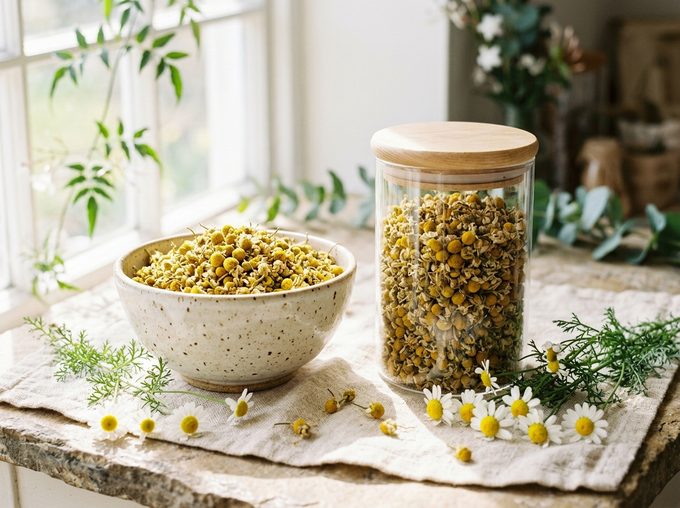
✦ HERBAL TRADITION • RELAXANT & RESTORATIVE FLORAL INFUSIONS
Calming Nervines
Delicate blossoms and aromatic leaves traditionally steeped in the evening to support quiet reflection, unwinding, and bedtime tea rituals.
🔬 Phytochemical Mechanism
Nervines contain volatile monoterpene alcohols (such as linalool in lavender and citral in lemon balm), flavones (such as apigenin in chamomile and scutellarin in skullcap), and iridoid glycosides that interact gently with GABA-A receptors and smooth-muscle calcium channels.
🌡️ Extraction & Steeping Protocol
Steep covered at 190°F–200°F (88°C–93°C) for 6 to 10 minutes. Never boil delicate nervine blossoms or Valerian root uncovered, as heat volatilizes the calming essential oils.
👅 Organoleptic Palate Signature
Ranges from apple-honey sweet (Chamomile, Linden) and lemony-mint (Lemon Balm) to briskly bitter (Blue Vervain, California Poppy) and earthy-musky (Valerian).
TRADITION COMPARISON TABLE
All 9 Calming Nervines Compared by Compound & Steep Ratio
| Botanical & Binomial | Plant Part | Key Phytochemicals | Organoleptic Palate & Aroma | Dose & Steep (8 oz) |
|---|---|---|---|---|
| German Chamomile Matricaria chamomilla |
Whole flower heads | Apigenin, Chamazulene, Alpha-bisabolol, Flavonoids | Honey-sweet, crisp green-apple aroma with a soft, golden floral palate that turns mildly bitter only if over-steeped. | 2 g – 3 g (1.5 to 2 tbsp) 195°F–200°F · 5–7 min covered |
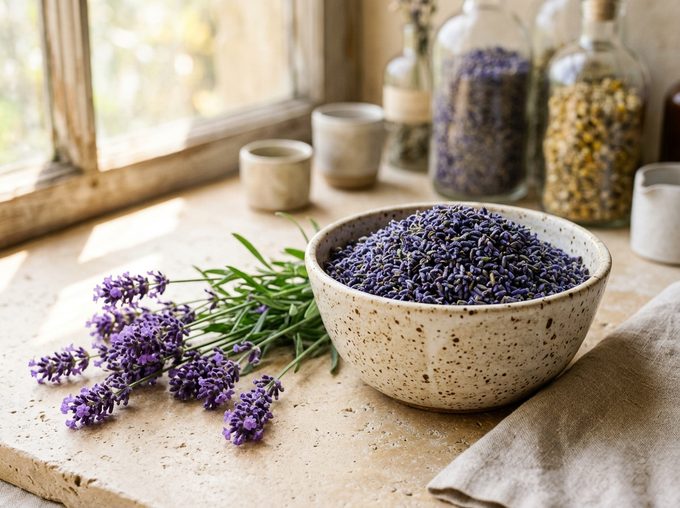
| English Lavender Lavandula angustifolia |
Dried flower buds | Linalool, Linalyl acetate, Lavandulol, Tannins | Sweet, herbaceous-floral, and softly balsamic with bright bergamot-citrus linalool notes and minimal camphor bite. | 1 g (1/2 to 1 level tsp) 195°F · 4–6 min covered |
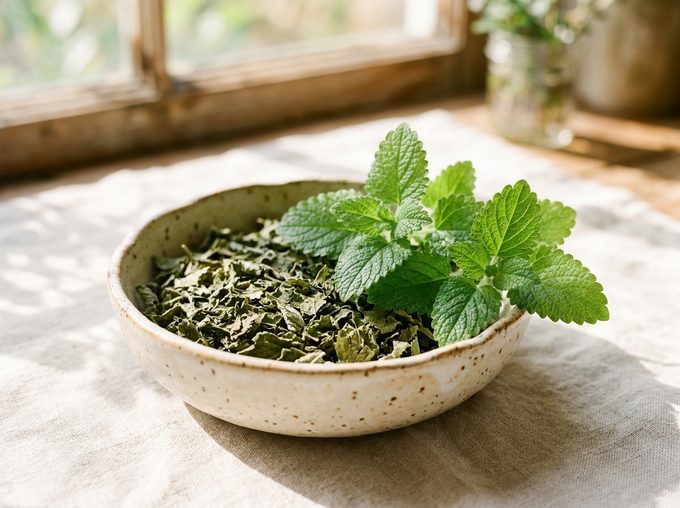
| Lemon Balm Melissa officinalis |
Aerial leaves | Citral (Geranial & Neral), Citronellal, Rosmarinic acid | Bright, sweet-lemony, and softly minty with a clean, uplifting herbaceous finish. | 2 g – 3 g (1.5 to 2 tbsp) 190°F–195°F · 6–8 min covered |
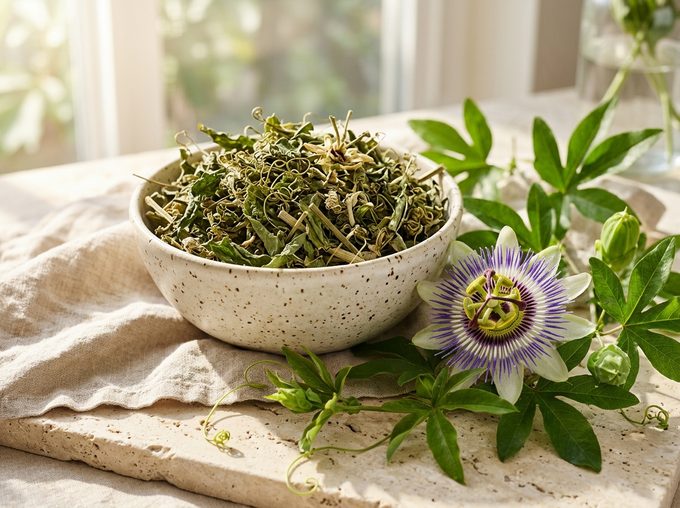
| Passionflower Passiflora incarnata |
Aerial vines, leaves & flowers | Vitexin, Isovitexin, Chrysin, Harmala trace alkaloids | Mild, grassy, and softly earthy-herbaceous with subtle hay-like notes. | 2 g – 3 g 200°F · 10–12 min covered |
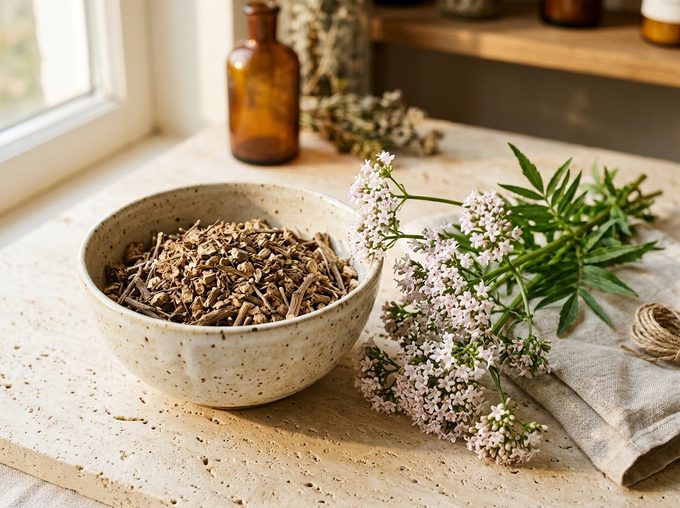
| Valerian Root Valeriana officinalis |
Dried rhizome & roots | Valerenic acid, Valepotriates, Bornyl acetate, Sesquiterpenes | Deeply earthy, musky, and pungent-woody with a bittersweet, camphor-balsamic root finish. | 2 g – 3 g 175°F–185°F · Steep 15–30 min covered |
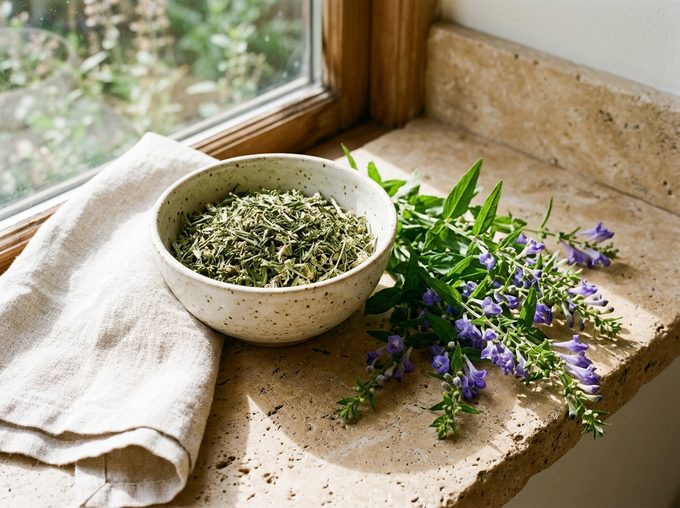
| American Skullcap Scutellaria lateriflora |
Flowering aerial parts | Baicalin, Scutellarin, Wogonin, Flavonoids | Mildly bitter, herbaceous, and grassy-minty without strong aromatic essential oils. | 2 g 200°F · 10–12 min covered |
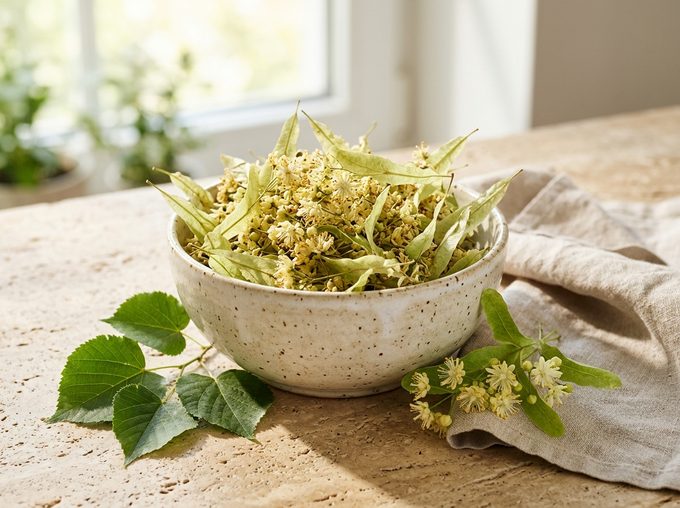
| Linden Blossom Tilia cordata |
Flowers with attached pale-green bract | Farnesol, Quercetin, Kaempferol, Soothing mucilage | Delicately floral, honey-sweet, and linden-nectar fragrant with a silky, slightly mucilaginous mouthfeel. | 2 g – 3 g 195°F–200°F · 8–10 min covered |
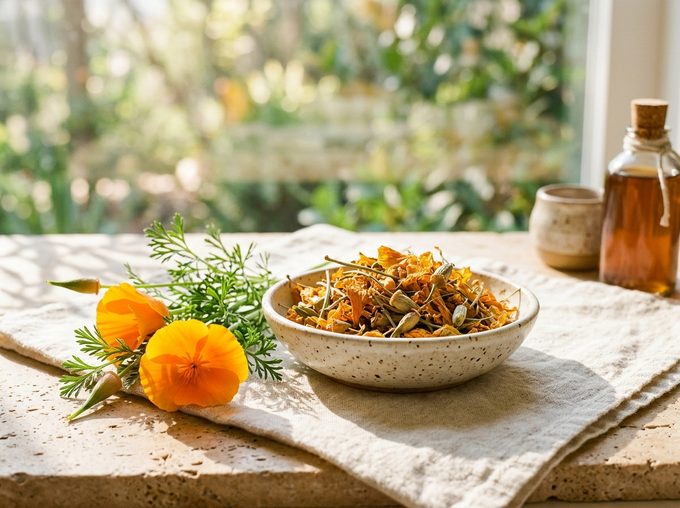
| California Poppy Eschscholzia californica |
Whole aerial plant (leaves, stems & flowers) | Californidine, Eschscholtzine, Protopine, Carotenoids | Distinctly earthy and mildly bitter-vegetal. | 1.5 g – 2 g 200°F · 8–10 min covered |
| Blue Vervain Verbena hastata |
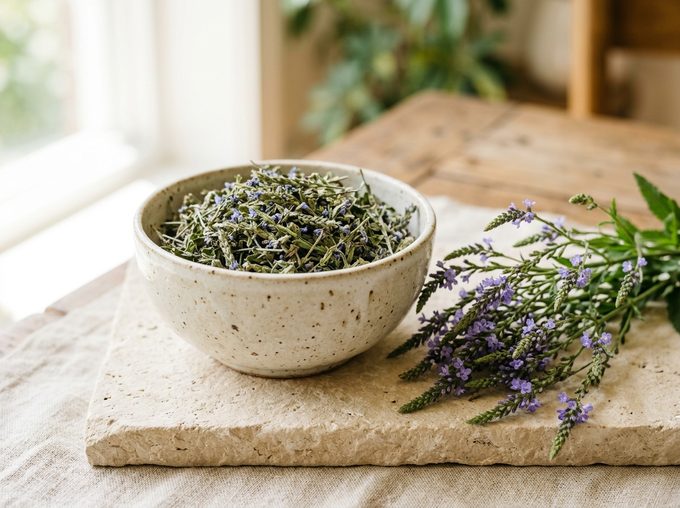
Flowering aerial tops | Verbenalin, Hastatoside, Aucubin (Iridoid glycosides) | Decidedly bitter and earthy-green with a clean, slightly astringent finish. | 1 g – 1.5 g 195°F–200°F · 6–8 min covered |
TRADITION FAQ
Frequently Asked Questions About Calming Nervines
What is the difference between a 'Relaxing Nervine' and a 'Nervine Trophorestorative'?
A relaxing nervine (like Chamomile, Passionflower, or Valerian) calms acute evening tension for a few hours. A nervine trophorestorative (like Lemon Balm, Skullcap, or Milky Oats) is taken daily over weeks to nourish and restore an overworked nervous system.
Can you drink calming nervines during the workday?
Gentle uplifting nervines like Lemon Balm, Linden Blossom, and Tulsi promote calm focus without drowsiness, whereas heavy evening nervines like Valerian Root and Passionflower are best reserved for twilight.
EXPLORE ALL 7 TRADITIONS & ENERGETICS TOOLS