Lemon Balm
Honeybee Leaf • Bright Citrus-Mint Nervine of Joyful Rest.
Explore the common forms, learn a little about the plant, and choose what suits your cupboard.
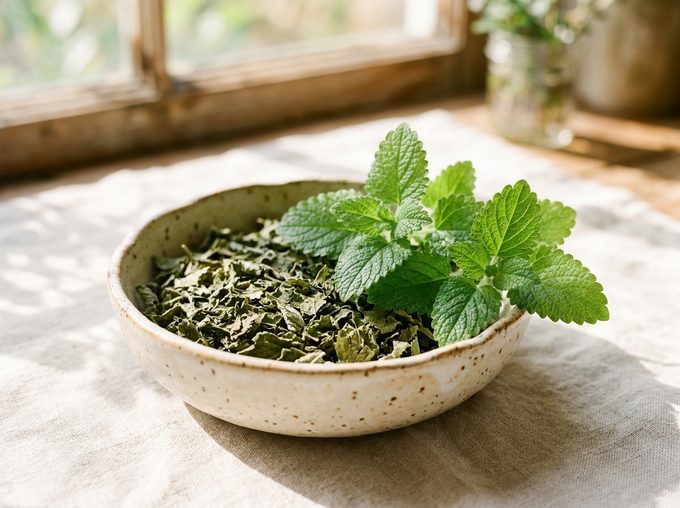
Whole cut-and-sifted lemon balm leaves for steeping and blending.
A little about lemon balm.
The plant
Bright, sweet-lemony, and softly minty with a clean, uplifting herbaceous finish. Native to Southern Europe & Mediterranean (Lamiaceae (Mint Family)).
The forms
Most often prepared as a covered citrus-mint tisane using 2 g – 3 g (1.5 to 2 tbsp dried leaf) or 1/4 cup fresh leaves at 190°F–195°F (88°C–90°C) (6–8 min covered).
Before you choose
Check the label for the Latin name (Melissa officinalis), and choose the form that suits your cupboard.
Traditional uses & research +
Botanical taxonomy: Melissa officinalis (Lamiaceae (Mint Family)) · Tradition: Calming Nervines · Key constituents: Citral (Geranial & Neral), Citronellal, Rosmarinic acid.
Curated collections: Evening Calm & Bedtime Infusions · Digestive Bitters & Warming Spices · Beginner's Home Apothecary Starter Shelf · Seasonal almanac: March Almanac (Early Spring Mineral Greens & Bitters) · April Almanac (Spring Garden Awakening & Young Leaves).
Traditional background: Melissa is the Greek word for honeybee; ancient beekeepers rubbed lemon balm leaves inside new hives to welcome swarms, while 17th-century Carmelite nuns steeped it into famous Eau de Mélisse.
Everyday & kitchen uses: A premier evening and afternoon tea leaf that pairs effortlessly with chamomile, peppermint, rosehips, and linden.
Standard preparation methods (compare all 50 steeping temperatures):
- Covered Citrus-Mint Tisane (2 g – 3 g (1.5 to 2 tbsp dried leaf) or 1/4 cup fresh leaves at 190°F–195°F (88°C–90°C)): 6–8 min covered
- Cold-Infused Sun Tea (1/2 cup fresh bruised leaves per quart cool water at Cool or room temp steep): Steep 2–4 hours covered, serve over ice
- Glycerite / Tincture Ratio (1:2 fresh leaf in 75% vegetable glycerin or alcohol at Room temp dark maceration): Infuse 4 weeks; fresh leaf has highest citral
Cautions & interactions +
Who should use caution: Very gentle for general tea enjoyment. In in-vitro studies, concentrated rosmarinic-rich Melissa officinalis extracts can inhibit thyroid-stimulating hormone (TSH) receptor binding; individuals with hypothyroidism or taking thyroid hormone replacement should consult their physician before using concentrated daily lemon balm extracts.
Species & lookalike verification: Lemon Balm (Melissa officinalis, Lamiaceae) has opposite, heart-shaped, deeply scalloped leaves on square stems. Compare with Lemon Verbena (Aloysia citrodora, Verbenaceae, which has long, pointed, smooth-edged lance leaves in whorls of three and retains a stronger lemon aroma when dried), Lemongrass (Cymbopogon citratus, a tropical grass stalk), and Catnip (Nepeta cataria, which has greyer, Downy leaves and a musky nepetalactone scent).
Cupboard storage (amber glass guide): Lemon balm loses its lemon aroma quickly if exposed to air; store in tightly sealed dark glass.
Sources & further reading +
Why does fresh lemon balm smell so much stronger than dried lemon balm?
Lemon balm has a very low total essential oil yield (often 0.05%–0.2%), which is why pure Melissa essential oil is one of the most expensive oils in the world. When dried above 95°F, its volatile citral evaporates rapidly. Always steep dried lemon balm at 190°F–195°F in a covered teapot.
What does 'Melissa' mean in Melissa officinalis?
Melissa is the classical Greek word for 'honeybee.' Ancient Mediterranean beekeepers rubbed freshly crushed lemon balm leaves inside newwooden hives to attract swarms and planted it around apiaries for its rich nectar.
How is Lemon Balm different from Lemon Verbena in tea?
Lemon Balm (a soft-leaved mint relative) is gentler, slightly earthier, and rich in calming rosmarinic acid. Lemon Verbena is a woody shrub whose tough leaves hold 10x more volatile citral when dried, giving a sharper, candy-bright lemon punch.
Can you drink lemon balm tea during the daytime without getting drowsy?
Yes—herbalists classify lemon balm as a 'trophorestorative' or uplifting nervine rather than a heavy sedative, making it popular for calm daytime focus as well as evening blends.
Companion Moss & Thyme guides & tools:
- Herbarium Journal: Evening Botanical Tea Rituals & Blending →
- Equipment Guide: Best Loose-Leaf Tea Infusers & Gooseneck Kettles →
- Interactive Calculator: Interactive 3-Part Tea Blend Synergy Builder →
Botanical references:
- Royal Botanic Gardens, Kew — Plants of the World Online: Melissa officinalis Taxonomic Record ↗
- PubChem / NIH National Library of Medicine: Phytochemical Profile (Citral (Geranial & Neral)) ↗
- European Medicines Agency (EMA) HMPC & German Commission E Herbal Monographs.
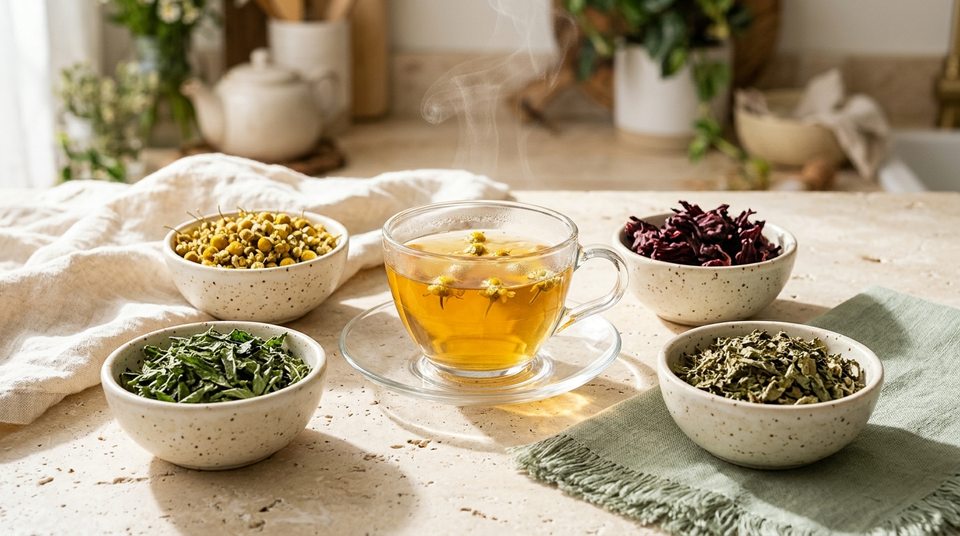
See the herb in context.
Watch our video guide The Most Powerful Herbs in the World, Explained and explore the plants it introduces.
Explore another herb.