Linden Blossom
Tilleul • Fragrant Honey-Scented Lime Tree Flowers of European Cafés.
Explore the common forms, learn a little about the plant, and choose what suits your cupboard.
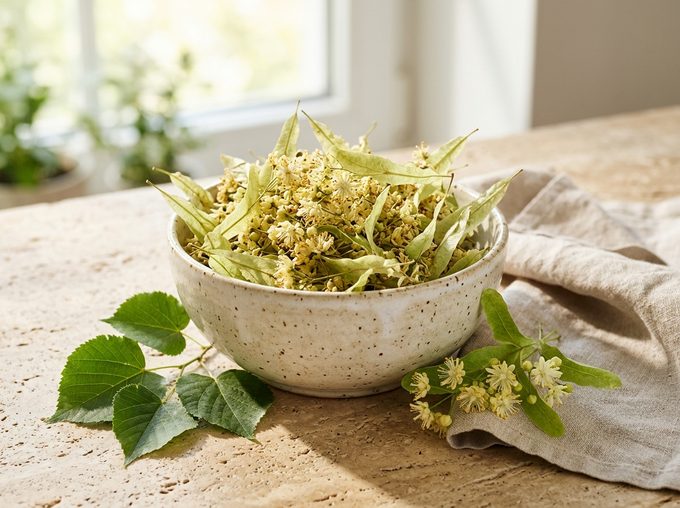
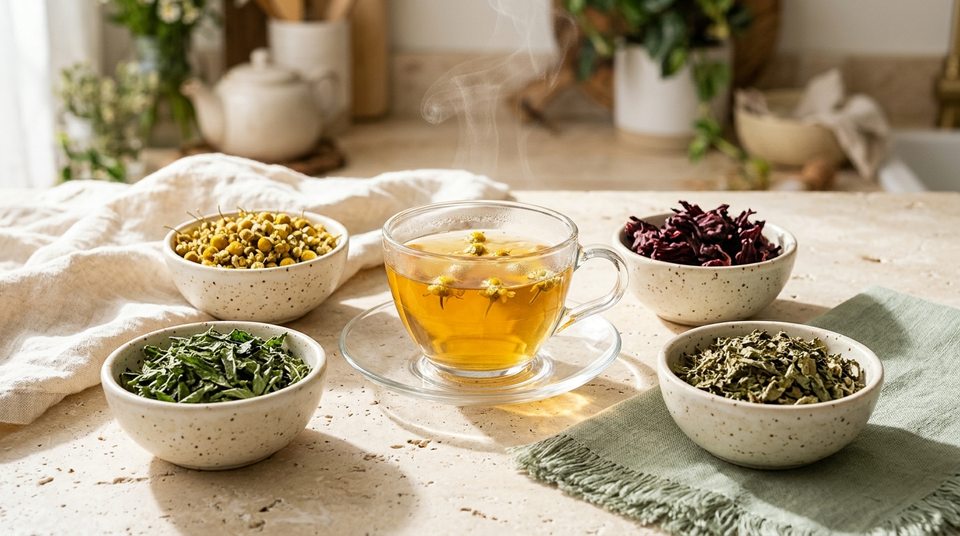
Whole dried linden blossom flowers for steeping and infusions.
A little about linden blossom.
The plant
Delicately floral, honey-sweet, and linden-nectar fragrant with a silky, slightly mucilaginous mouthfeel. Native to Europe & Western Asia (Malvaceae).
The forms
Most often prepared as a classic french tilleul infusion using 2 g – 3 g (2 tbsp whole flowers with pale-green bracts) at 195°F–200°F (90°C–93°C) (8–10 min covered).
Before you choose
Check the label for the Latin name (Tilia cordata), and choose the form that suits your cupboard.
Traditional uses & research +
Botanical taxonomy: Tilia cordata (Malvaceae) · Tradition: Calming Nervines · Key constituents: Farnesol, Quercetin, Kaempferol, Soothing mucilage.
Curated collections: Evening Calm & Bedtime Infusions · Ruby Berries & Floral Tisanes · Seasonal almanac: May Almanac (May Blossom & Early Meadow Florals) · June Almanac (Midsummer Lavender & Sunlit Blossoms).
Traditional background: Known in France as Tilleul, the linden tree stood at the center of historic German and Slavic village squares as the tree of peace, hospitality, and evening conversation.
Everyday & kitchen uses: Steeped whole (flower plus winged bract) for a silky, honey-scented bedtime infusion that pairs wonderfully with chamomile and rosehips.
Standard preparation methods (compare all 50 steeping temperatures):
- Classic French Tilleul Infusion (2 g – 3 g (2 tbsp whole flowers with pale-green bracts) at 195°F–200°F (90°C–93°C)): 8–10 min covered
- Longer Demulcent Cold/Warm Steep (3 tbsp flowers per pint warm water at 180°F cooling to room temp): Steep 20–30 min for thicker soothing mucilage
- Linden-Hawthorn Floral Blend (1.5 tbsp linden + 1 tsp hawthorn flower/leaf + 1 tsp rosehips at 200°F (93°C)): 10 min covered
Cautions & interactions +
Who should use caution: One of the gentlest European household tisanes, widely enjoyed by all ages in France ('Tilleul'). Always harvest linden blossoms within 2–4 days of opening in early summer, and avoid trees sprayed with urban street pesticides.
Species & lookalike verification: Official apothecary Linden comes from Small-Leaved Lime / Linden (Tilia cordata) or Large-Leaved Linden (Tilia platyphyllos)—note that 'Lime tree' in British English refers to the Tilia genus, which is completely unrelated to citrus limes (Citrus aurantiifolia). Avoid Silver Linden (Tilia tomentosa) if harvesting late in the season when flowers are over-mature.
Cupboard storage (amber glass guide): Store loosely in a large glass jar so the delicate papery bracts do not crumble.
Sources & further reading +
Should linden tea include the papery green leaf bract or just the flowers?
Include both! Traditional European pharmacopoeias specify the entire inflorescence—both the fragrant yellow-white blossoms (which hold volatile farnesol) and the pale yellowish-green oblong bract (which contributes soothing mucilage and condensed tannins).
Why is linden tea called 'Tilleul' in France?
Tilleul is the French name for the linden/basswood tree (Tilia cordata). Across France, a cup of hot Tilleul after dinner is the most common caffeine-free household nightcap, famously celebrated alongside the madeleine cake in Marcel Proust's In Search of Lost Time.
Does linden tea have any citrus flavor since the tree is called the 'Lime Tree'?
No—in Britain, Tilia trees are called 'Lime trees' due to an old Germanic linguistic shift from 'lind' to 'lime.' It has zero connection to citrus fruit; its flavor is pure wildflower honey and soft meadow greenery.
Why does linden tea become slightly silky if you steep it longer?
Linden flowers and bracts contain up to 10% water-soluble arabinogalactan mucilage polysaccharides, which dissolve gently into the water to give the tea a smooth, throat-coating texture.
Companion Moss & Thyme guides & tools:
- Herbarium Journal: Evening Botanical Tea Rituals & Blending →
- Equipment Guide: Best Loose-Leaf Tea Infusers & Gooseneck Kettles →
- Interactive Calculator: Interactive 3-Part Tea Blend Synergy Builder →
Botanical references:
- Royal Botanic Gardens, Kew — Plants of the World Online: Tilia cordata Taxonomic Record ↗
- PubChem / NIH National Library of Medicine: Phytochemical Profile (Farnesol) ↗
- European Medicines Agency (EMA) HMPC & German Commission E Herbal Monographs.
See the herb in context.
Watch our video guide The Most Powerful Herbs in the World, Explained and explore the plants it introduces.
Explore another herb.