Sweet Basil
Clove-Scented Royal Culinary Leaf of Summer Gardens.
Explore the common forms, learn a little about the plant, and choose what suits your cupboard.
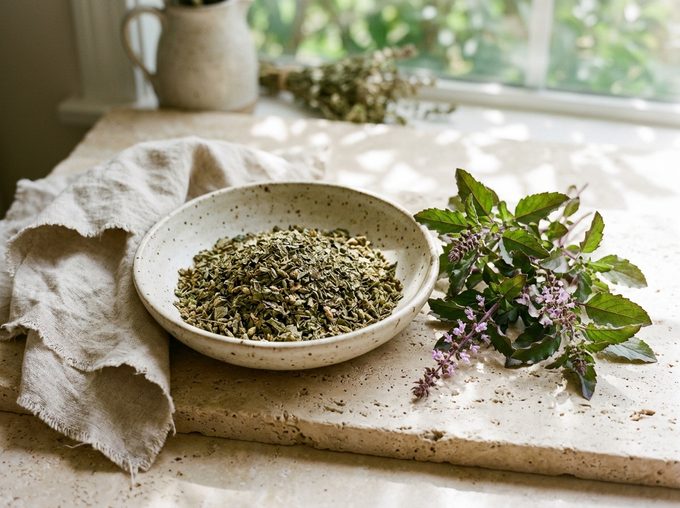
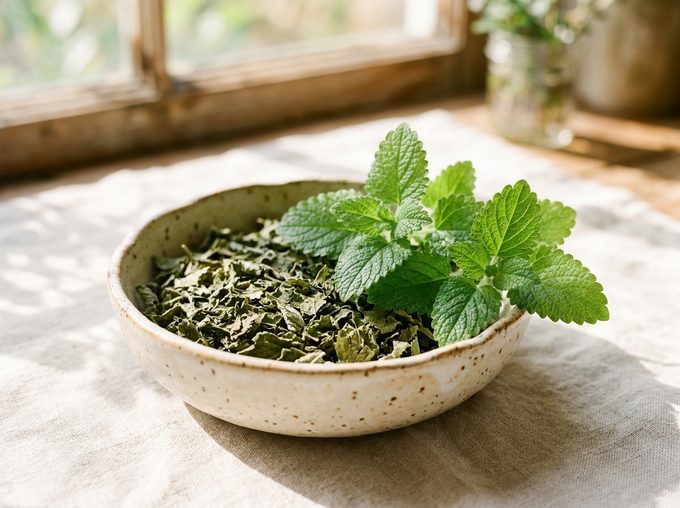
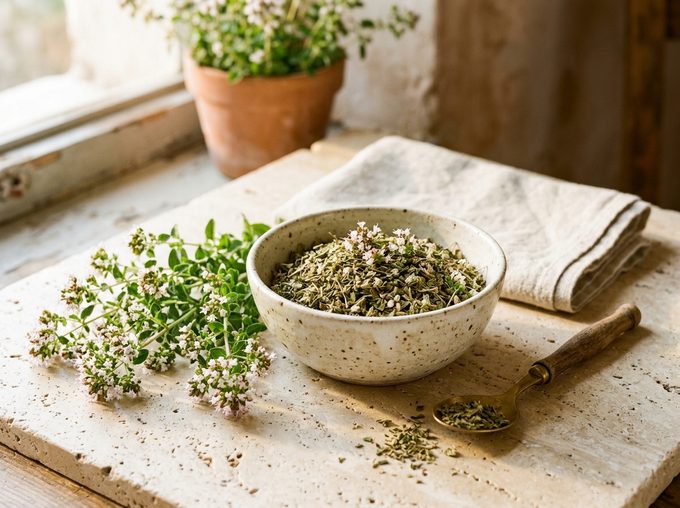
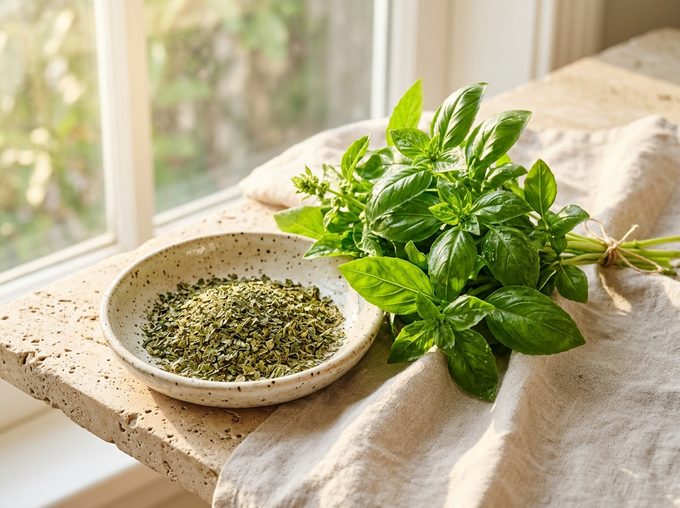
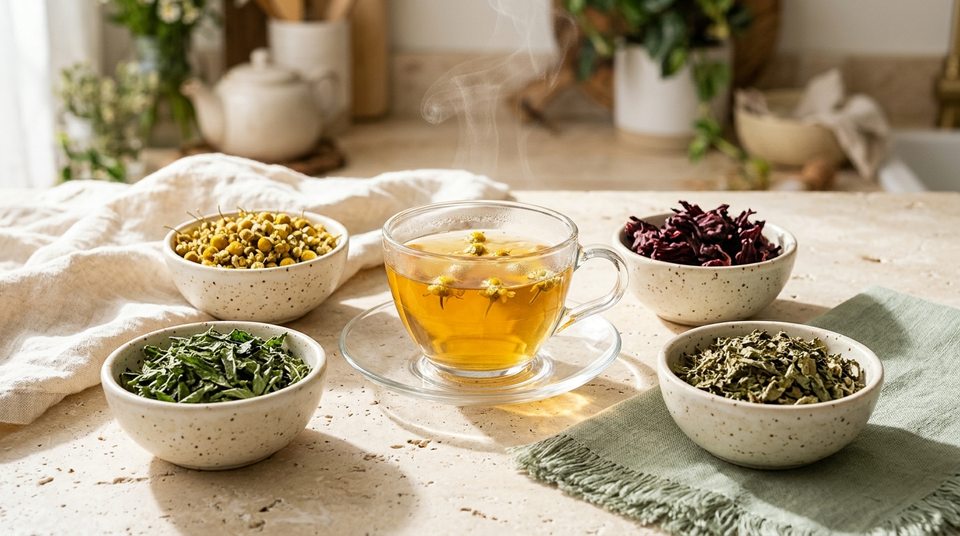
Whole dried sweet basil flowers for steeping and infusions.
A little about sweet basil.
The plant
Lush, sweet-spicy, and floral-anise with warm clove and sweet linalool top notes. Native to Tropical Asia & Mediterranean (Lamiaceae (Mint Family)).
The forms
Most often prepared as a fresh or dried leaf tisane using 2 g dried (1 tbsp) or 8–10 fresh leaves at 195°F (90°C) (5–7 min covered).
Before you choose
Check the label for the Latin name (Ocimum basilicum), and choose the form that suits your cupboard.
Traditional uses & research +
Botanical taxonomy: Ocimum basilicum (Lamiaceae (Mint Family)) · Tradition: Volatile Aromatics · Key constituents: Linalool, Eugenol, Estragole, Citral.
Curated collections: Mediterranean Culinary & Hearth Herbs · Digestive Bitters & Warming Spices · Seasonal almanac: July Almanac (High-Summer Mint, Basil & Meadow Nervines).
Traditional background: Taking its name from the Greek basilikon ('royal plant'), sweet basil traveled ancient spice routes from India to the Mediterranean, becoming the signature summer herb of Liguria and Provence.
Everyday & kitchen uses: Used fresh or gently dried in culinary sauces, infused vinegars, citrus-basil summer iced teas, and aromatic kitchen blends.
Standard preparation methods (compare all 50 steeping temperatures):
- Fresh or Dried Leaf Tisane (2 g dried (1 tbsp) or 8–10 fresh leaves at 195°F (90°C)): 5–7 min covered
- Basil-Strawberries Cold Infusion (2 tbsp basil + 4 sliced strawberries in 16 oz water at Cold refrigerator steep): Steep 3–4 hours chilled
- Herbal Vinegar Maceration (1/2 cup purple or sweet basil in 2 cups white wine vinegar at Cool dark cabinet): Steep 2 weeks, then strain
Cautions & interactions +
Who should use caution: Culinary and tea use is safe. Sweet basil essential oil contains estragole (methyl chavicol); concentrated essential oil should not be ingested internally or used during pregnancy.
Species & lookalike verification: Genovese Sweet Basil (Ocimum basilicum) is distinct from Sacred Holy Basil / Tulsi (Ocimum tenuiflorum, an adaptogenic subshrub with notched fuzzy leaves and a spicier clove-pepper profile), Thai Basil (O. basilicum var. thyrsiflora, high in licorice-scented estragole), and Lemon Basil (O. × africanum).
Cupboard storage (amber glass guide): Freeze-dried or shade-dried basil retains far more green color and sweet clove aroma than high-heat oven-dried leaf.
Sources & further reading +
Why does dried sweet basil taste different from fresh basil?
Fresh basil's brightest top notes (linalool and 1,8-cineole) evaporate easily during warm-air dehydration, leaving behind heavier eugenol (clove) and estragole (anise) compounds. Steeping dried basil covered at a lower temperature (195°F) preserves its sweeter floral notes.
Can I substitute Sweet Basil for Holy Basil (Tulsi) in herbal tea?
While both belong to the genus Ocimum, Holy Basil (Ocimum tenuiflorum) contains higher concentrations of ursolic acid, rosmarinic acid, and eugenol prized in Ayurvedic adaptogenic infusions. Sweet basil makes a lovely aromatic digestive tea, but it is milder than Tulsi.
Why do fresh basil leaves turn black in the refrigerator?
Basil is a tropical herb native to India and Africa; temperatures below 50°F (10°C) rupture its cell walls and cause enzymatic browning. Store fresh basil stems upright in a glass of water on the counter like cut flowers, and store dried basil in dark glass.
What fruits and herbs pair best with sweet basil in iced tea?
Lemon verbena, lemon balm, peach, strawberry, and hibiscus complement sweet basil's linalool-clove profile.
Companion Moss & Thyme guides & tools:
- Herbarium Journal: Evening Botanical Tea Rituals & Blending →
- Equipment Guide: Best Loose-Leaf Tea Infusers & Gooseneck Kettles →
- Interactive Calculator: Interactive 3-Part Tea Blend Synergy Builder →
Botanical references:
- Royal Botanic Gardens, Kew — Plants of the World Online: Ocimum basilicum Taxonomic Record ↗
- PubChem / NIH National Library of Medicine: Phytochemical Profile (Linalool) ↗
- European Medicines Agency (EMA) HMPC & German Commission E Herbal Monographs.
See the herb in context.
Watch our video guide The Most Powerful Herbs in the World, Explained and explore the plants it introduces.
Explore another herb.