Infusion vs. Decoction: Water Temperature & Steep Times for Leaves, Flowers and Roots
Why delicate leaves and blossoms require a covered hot-water steep (infusion), dense woody roots and barks demand a gentle stovetop simmer (decoction), and mucilage-rich marshmallow root thrives in cool water.
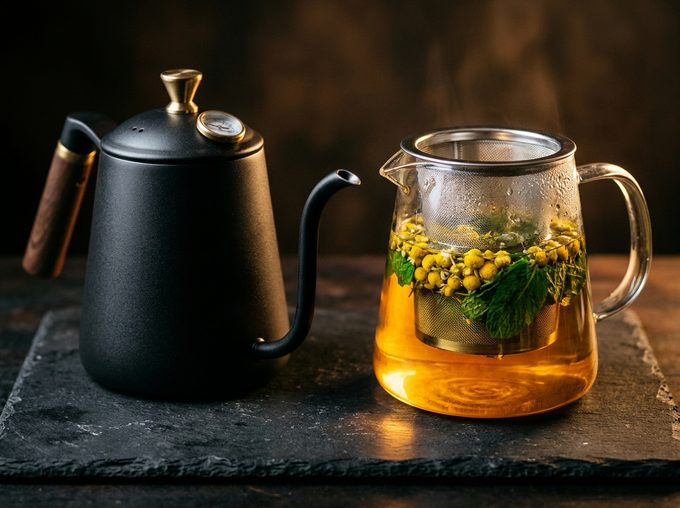
1. Covered Hot Infusions (Leaves, Flowers & Aromatic Seeds)
Delicate plant tissues—such as German chamomile, lemon balm, peppermint, thyme, and linden blossom—hold their volatile essential oils near the surface of the leaf or petal. Pouring 195°F–205°F water over the herb and immediately covering the vessel with a lid for 5 to 10 minutes extracts these aromatics while preventing them from escaping into the room with the steam.
2. Simmered Decoctions (Roots, Rhizomes, Barks & Woody Fungi)
Dense structural plant parts—such as ashwagandha, eleuthero, astragalus, burdock root, ginger, Ceylon cinnamon quills, and sliced reishi mushroom—cannot release their deeper polysaccharides and triterpenes in a brief 5-minute pour-over. Place the root pieces in cold water in a covered pot, bring to a gentle low simmer, and cook for 15 to 35 minutes.
3. Cold Macerations (Mucilage-Rich Demulcents)
Botanicals prized for silky polysaccharide mucilage—most notably peeled marshmallow root (Althaea officinalis)—extract best in cool or room-temperature water over 4 to 8 hours. Boiling water extracts starch rather than pure, soothing mucilage.
Representative Botanicals & Extraction Parameters
| Botanical & Binomial | Plant Part | Key Phytochemicals | Organoleptic Palate & Aroma | Dose & Steep (8 oz) |
|---|---|---|---|---|
| Common Thyme Thymus vulgaris |
Aerial leaves & flowering tops | Thymol, Carvacrol, Linalool, Rosmarinic acid | Pungent, earthy, and camphoraceous with a warming clove-like thymol bite and a dry, slightly astringent finish. | 1.5 g – 2 g 200°F–205°F · 8–10 min |
| Garden Sage Salvia officinalis |
Whole or rubbed velvety leaves | Rosmarinic acid, Camphor, Cineole, Salvianolic acids | Savory, resinous, and slightly bitter-astringent with warm camphor, pine, and eucalyptus undertones and a velvety mouthfeel. | 1.5 g – 2 g (1 tbsp rubbed leaf) 200°F · 6–8 min covered |
| Rosemary Salvia rosmarinus |
Evergreen needles & flowering sprigs | Carnosic acid, Rosmarinic acid, 1,8-Cineole, Alpha-pinene | Crisp, piney, resinous, and invigorating with bright 1,8-cineole, camphor, and woody balsamic notes. | 1.5 g 200°F–205°F · 7–10 min covered |
| Peppermint Mentha × piperita |
Serrated aerial leaves | Menthol, Menthone, Menthyl acetate, Rosmarinic acid | Intensely brisk, sweet-herbaceous, and peppery at first sip, followed by a prolonged, clean menthol cooling sensation across the palate. | 2 g (1 heaping tbsp) 200°F · 7–10 min covered |
| Greek Oregano Origanum vulgare hirtum |
Dried leaves & flower buds | Carvacrol, Thymol, Rosmarinic acid, Beta-caryophyllene | Bold, fiery, savory, and peppery-warm with high carvacrol intensity that numbs the tip of the tongue slightly when chewed raw. | 1.5 g 200°F–205°F · 8–10 min covered |
| Sweet Basil Ocimum basilicum |
Tender leaves & flowering tops | Linalool, Eugenol, Estragole, Citral | Lush, sweet-spicy, and floral-anise with warm clove and sweet linalool top notes. | 2 g dried (1 tbsp) 195°F · 5–7 min covered |
| Bay Laurel Laurus nobilis |
Whole leathery dried leaves | 1,8-Cineole, Eugenol, Linalool, Costunolide | Deeply balsamic, woody, and savory-herbal with layered notes of eucalyptus, clove, pine, and nutmeg. | 2–3 whole dried leaves (cracked in half) 205°F–212°F gentle simmer · Simmer covered 10–12 min, then let stand 5 min |
| German Chamomile Matricaria chamomilla |
Whole flower heads | Apigenin, Chamazulene, Alpha-bisabolol, Flavonoids | Honey-sweet, crisp green-apple aroma with a soft, golden floral palate that turns mildly bitter only if over-steeped. | 2 g – 3 g (1.5 to 2 tbsp) 195°F–200°F · 5–7 min covered |